
Introducing "Love and Lost Creatures"
An invitation to this Substack based on the moments that helped give it life.

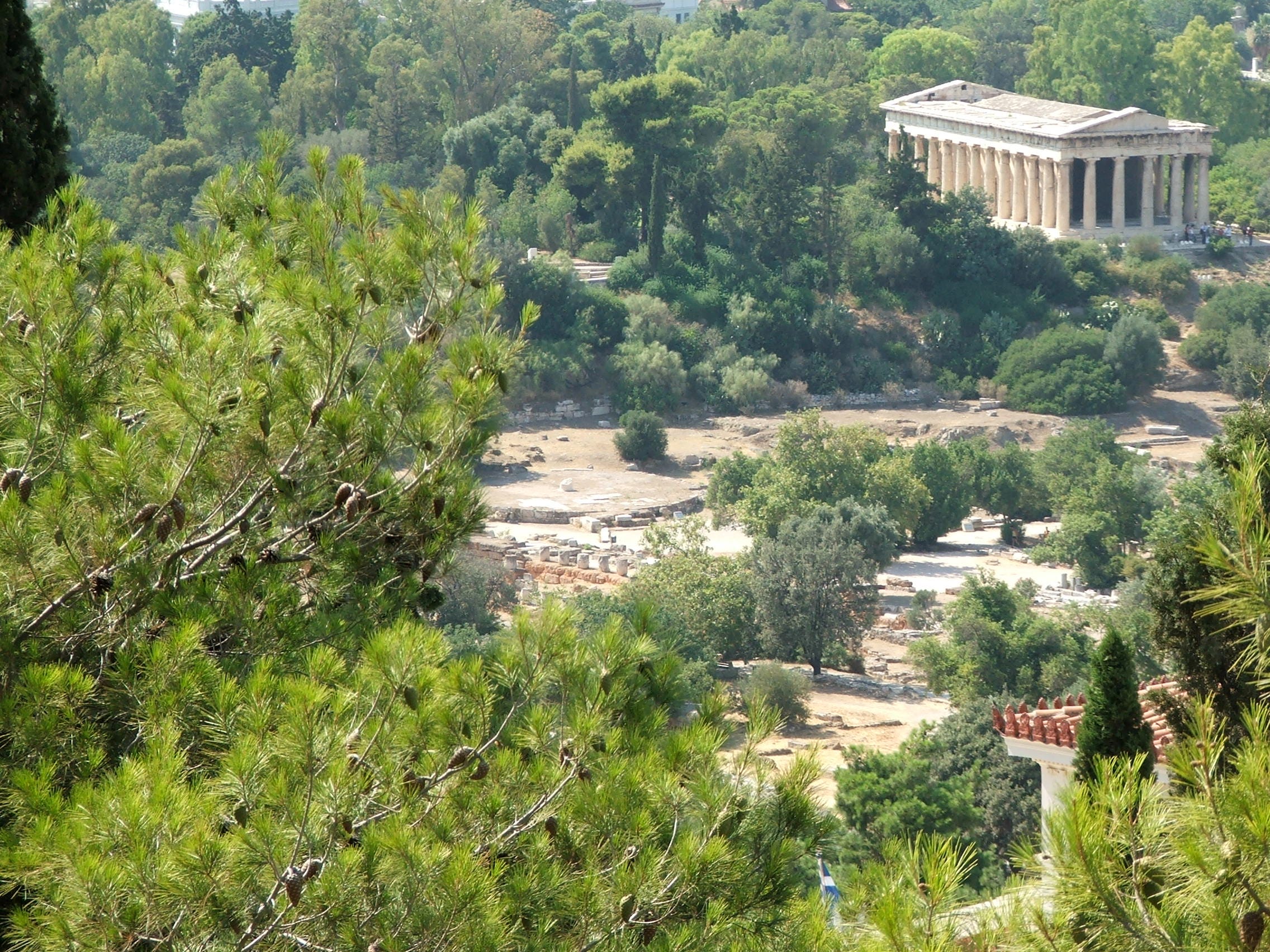
From one day to the next, it is easy to take time and place as matters that are simply given. The moments when we take notice of neither time nor place far outweigh the moments in which we perceive how vital these matters are. But those rarer moments stand out, and I believe this is because such moments are the ones when we sense time and place are giving something to us. If we give ourselves to those moments and are receptive to what they teach, we will find that we are prepared to give something of ourselves that has always been there, patiently waiting for those life-giving moments of recollection. These are moments of love that we must hold as ever-present in our lives. They should not be lost, but if they are, we can rest assured that there is something truly beautiful in their recovery.
This Substack, “Love and Lost Creatures,” traces its beginnings to two wonderful moments in my life. The importance of the first moment is not one I sensed in the moment; the second moment, however, is one in which I sensed right away that something significant was present and calling something forth from my heart, mind, soul, and body.
The first moment occurred early in the Fall semester of my freshmen year at Mercer University. I entered college already intent on being a Political Science major. I also enrolled in Mercer’s Great Books program, not knowing any more about what I was undertaking other than it revolved around reading books and discussing them in seminars. In my Honors seminar, the class’s student preceptor urged the professor to assign Walker Percy’s essay “The Loss of the Creature,” and the professor obliged. If you know the essay (or just read it after seeing the link), you would see the irony in me describing it here. In the hopes that I do not spoil the heart of its teaching for readers, I will limit myself here to saying what it taught me.
There are two lessons I owe to “The Loss of the Creature.” The first, more immediate lesson concerned the need to see things on their own terms, without allowing anyone to dictate one’s own perception of what something is. Such seeing is, in Percy’s terms, one’s own “sovereignty.” I was (and still am) quite spirited in this regard. In the weeks after reading Percy, I remember detesting the book Freakonomics because of the frameworks it imposed on reality. That spiritedness serves something deeper, though, and it grew as I advanced in Mercer’s Great Books classes and began to study the history of political thought and philosophy for my double-major in Political Science and Philosophy. The moment when I encountered Percy’s essay marked the time when I began growing into a rigorous commitment to read books on their own terms in order to find truth not just about their teachings, but about life itself.
The second lesson I learned from Percy is an extension of the first. Sometimes, to see things for what they are, one must strip away what has been imposed upon them by others. This activity, according to Percy, is one of “recovery.” Mercer had, mercifully, protected me from needing to practice Percy’s sense of recovery very often, partly because some of my professors were fans of Percy, and partly because others taught their classes by putting the texts first. It was not until graduate school when I began to see how academic research depends on working within the confines of disciplines that demand one studies and writes about matters on terms the discipline sets. Despite obtaining a Ph.D. in Political Science, I have little interest in being bound to an academic discipline. It is not hard for me to see what these disciplines hide from us about the matters they study. Nor is it lost on me what conformity to the image of a discipline does to oneself. If we are not careful, both these matters and who we are risk becoming lost creatures in need of recovery.
The second moment occurred in the summer between my junior and senior years at Mercer on a study abroad trip to Athens. The picture you see at the top of this post and in this Substack’s publication logo is one I took that summer of the Agora, the center of ancient Athens’ public life. In the Agora one will find the Archon’s porch (the setting for Plato’s Euthyphro), and the lawcourt where Socrates defended his pursuit of the philosophic life before being put to death by his fellow Athenians (the subject of Plato’s Apology). After spending my first three years at Mercer becoming familiar with Socrates, Plato, and Aristotle, I could not help but be struck with wonder at the place where I knew they lived.
Yet the Agora held something more for me. On my second-to-last day in Athens, I went to the Agora, sat on a bench in front of the Prytaneum, pulled out my MP3 player, placed my earbuds in my ears, and, inspired by my recent reading of Plato’s Symposium, put pen to paper on a speech I would deliver that evening on the nature of love. Though I was not in the class to which this was assigned, I wanted to join them for the evening’s festivities. In that hour and a half during which I composed the speech, there was a harmony between time, place, music, and who I was that took me by surprise. There was mystery in that inspiration, in that moment that became my touchstone and compass for all that was ahead of me. This moment still guides me today, and it will undoubtedly direct me in all that awaits.
The details of that moment in the Agora are matters that I hold deep in my heart. I do not reveal them to everyone, and they will not come forth here. There is some necessity and prudence in such guarding of one’s own heart. Yet I have come to realize that this does not mean one cannot venture to speak and write from the heart. When I reflect on where I am in life at this moment, something calls me to make this attempt, to leave behind my own fears of putting my own thoughts out into the world and sharing them with more than my family and friends.
I am, by calling and profession, a teacher. My path to this vocation began with reading, writing, and music. When I search for truth, I look and listen for all that sings, for signs of harmony. There is a wholeness to truth in all of its forms. This wholeness may be sensed at first glance or on first hearing, but if we wish to know it fully, we must sit with it, looking at and listening to it deeply. Life does not consist in separable wholes and parts; no, life consists in the deep and mysterious ways in which parts and wholes are inseparably bound. This wholeness is the natural foundation for love. We long to discover this wholeness with our hearts, minds, souls, and bodies. Life and love will diminish without this wholeness. We ignore this truth at our own peril. And if we forget this truth, whether consciously or unconsciously, we must recover it.
“Love and Lost Creatures” is my public invitation to those who desire to share in the beautiful mystery of living in wonder and love. Drawing from my work as a student and teacher of the Great Books, I will write here about what I see is worthy of wonder in our world. I do not intend to set a limit to what I address. I do not know what will catch my eye, or when a muse will strike. What I do know is that my writing will embody honest attempts to see things deeply and carefully. Here as in the classroom, it is not my job to tell people what they must see and think. The far more important and difficult work is learning what the natural activities of seeing and hearing involve, of being open to their depths and choosing to see more fully who we are as human beings and to hear what things we have been called to love.